

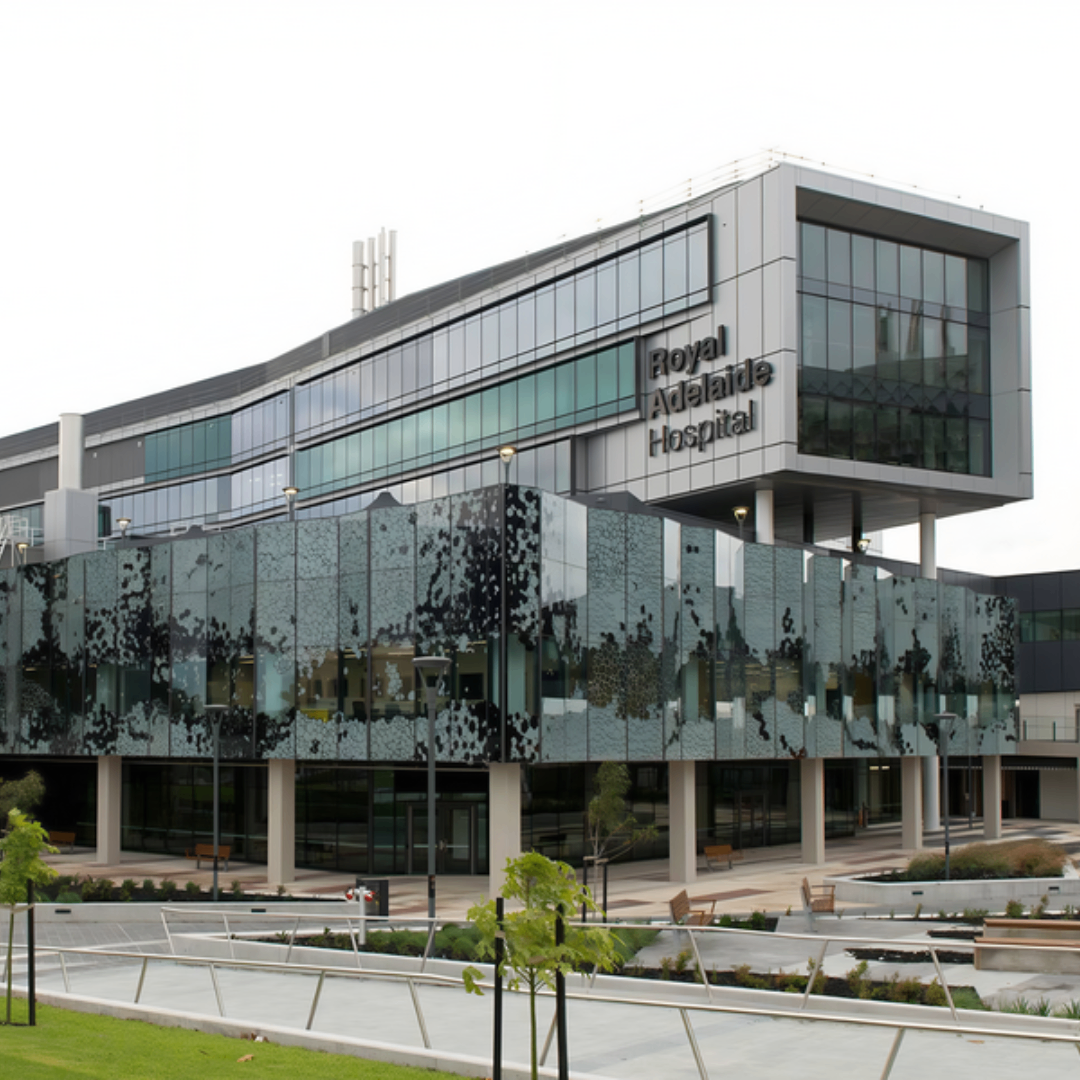
Type: Academic Medical Center / Teaching Hospital
Location: Adelaide, South Australia, Australia
Founded: 1840 (relocated to new facility in 2017)
Affiliation: The University of Adelaide – Adelaide Medical School
Ownership: Public (Government of South Australia)
Overview
The Royal Adelaide Hospital, (RAH) is one of Australia’s most advanced and comprehensive academic medical centers. As the flagship tertiary referral hospital for South Australia, it integrates high-level clinical services, medical education, and translational research within a digitally connected healthcare environment.
Originally established in 1840, RAH has evolved into a world-class institution. In 2017, it relocated to a purpose-built, state-of-the-art facility within Adelaide BioMed City. Today, it is widely recognized as one of the most technologically sophisticated hospitals in the Southern Hemisphere.
Serving as a major tertiary and quaternary referral center, the hospital manages complex and high-acuity cases from across South Australia and neighboring regions. Its strategic role within Australia’s healthcare system ensures access to advanced diagnostics, specialized interventions, and multidisciplinary expertise.
Key Services & Specialties
- Cardiovascular Medicine & Cardiothoracic Surgery
- Neurosciences (Neurology & Neurosurgery)
- Trauma & Emergency Medicine
- Critical Care & Intensive Care Medicine
- Oncology & Comprehensive Cancer Services
- Organ Transplantation (Renal & Multi-Organ Support)
- Gastroenterology & Hepatology
- Renal Medicine & Dialysis Services
- Orthopedics & Complex Trauma Surgery
- Infectious Diseases & Immunology
As a Level I trauma center for South Australia, RAH plays a pivotal role in managing major trauma and life-threatening emergencies. Supported by advanced imaging systems, hybrid operating suites, and integrated electronic medical records, clinical teams deliver evidence-based and patient-centered care.
Academic & Research Role
The Royal Adelaide Hospital serves as a principal clinical training site for the Adelaide Medical School under The University of Adelaide. It provides structured education and hands-on clinical training for:
- Undergraduate medical students
- Resident medical officers
- Specialist trainees and fellows
- Nursing and allied health professionals
In addition, the hospital actively participates in clinical trials and biomedical research across multiple disciplines. Areas of focus include cardiovascular disease, critical care medicine, transplantation science, oncology, and precision health technologies. Through strong collaboration with research institutes in Adelaide BioMed City, RAH promotes translational research that bridges laboratory discoveries and bedside application.
Capacity & Facilities
- 800+ inpatient beds
- Advanced Intensive Care Units (ICUs)
- High-dependency and specialty wards
- State-of-the-art operating theatres
- Hybrid interventional suites
- Comprehensive diagnostic imaging (MRI, CT, PET, interventional radiology)
- Major emergency and trauma center
- Integrated digital health infrastructure
The hospital’s single-patient room design enhances infection control, privacy, and patient comfort. Furthermore, its environmentally sustainable architecture reflects Australia’s commitment to modern healthcare infrastructure.
Mission
To provide high-quality tertiary and quaternary healthcare services, advance medical education and clinical research, and improve population health outcomes across South Australia and Australia.
Reputation
Widely regarded as one of Australia’s leading public hospitals, The Royal Adelaide Hospital is recognized for excellence in trauma care, critical care medicine, neurosciences, and cardiovascular services. Its integration of advanced technology, academic strength, and patient-focused design positions it as a benchmark institution in the Asia-Pacific healthcare landscape.





Leave a Reply